Product Description
Product Description
A ratchet torque limiter is a device able to interrupt the transmission of power in the event of a orque CHINAMFG or overload that exceeds the setting. The torque limiter is automatically re-engaged after the cause of the overload is removed. Ratchet torque limiters are generally employed to protect t implements subjected to constant or alternating torque from overloads.
The setting is normally 2 to 3 times the median torque M.
When the device is slipping, the user should promptly stop the PTO to avoid excessive wear.
Ratchet torque limiters should be used only on drivelines operating at speeds less than 700 RPM.
Here is our advantages when compare to similar products from China:
1.Forged yokes make PTO shafts strong enough for usage and working;
2.Internal sizes standard to confirm installation smooth;
3.CE and ISO certificates to guarantee to quality of our goods;
4.Strong and professional package to confirm the good situation when you receive the goods.
Product Specifications
Packaging & Shipping
Certifications
Company Profile
HangZhou Hanon Technology Co.,ltd is a modern enterprise specilizing in the development,production,sales and services of Agricultural Parts like PTO shaft and Gearboxes and Hydraulic parts like Cylinder , Valve ,Gearpump and motor etc..
We adhere to the principle of ” High Quality, Customers’Satisfaction”, using advanced technology and equipments to ensure all the technical standards of transmission .We follow the principle of people first , trying our best to set up a pleasant surroundings and platform of performance for each employee. So everyone can be self-consciously active to join Hanon Machinery.
FAQ
1.WHAT’S THE PAYMENT TERM?
When we quote for you,we will confirm with you the way of transaction,FOB,CIFetc.<br> For mass production goods, you need to pay 30% deposit before producing and70% balance against copy of documents.The most common way is by T/T.
2.HOW TO DELIVER THE GOODS TO US?
Usually we will ship the goods to you by sea.
3.How long is your delivery time and shipment?
30-45days
| Type: | Ratchet Torque Limiter |
|---|---|
| Usage: | Pto Shaft |
| Material: | 45cr Steel |
| Power Source: | Pto Shaft |
| Weight: | 1-2kg |
| After-sales Service: | Online Support |
| Samples: |
US$ 20/Piece
1 Piece(Min.Order) | |
|---|
| Customization: |
Available
|
|
|---|
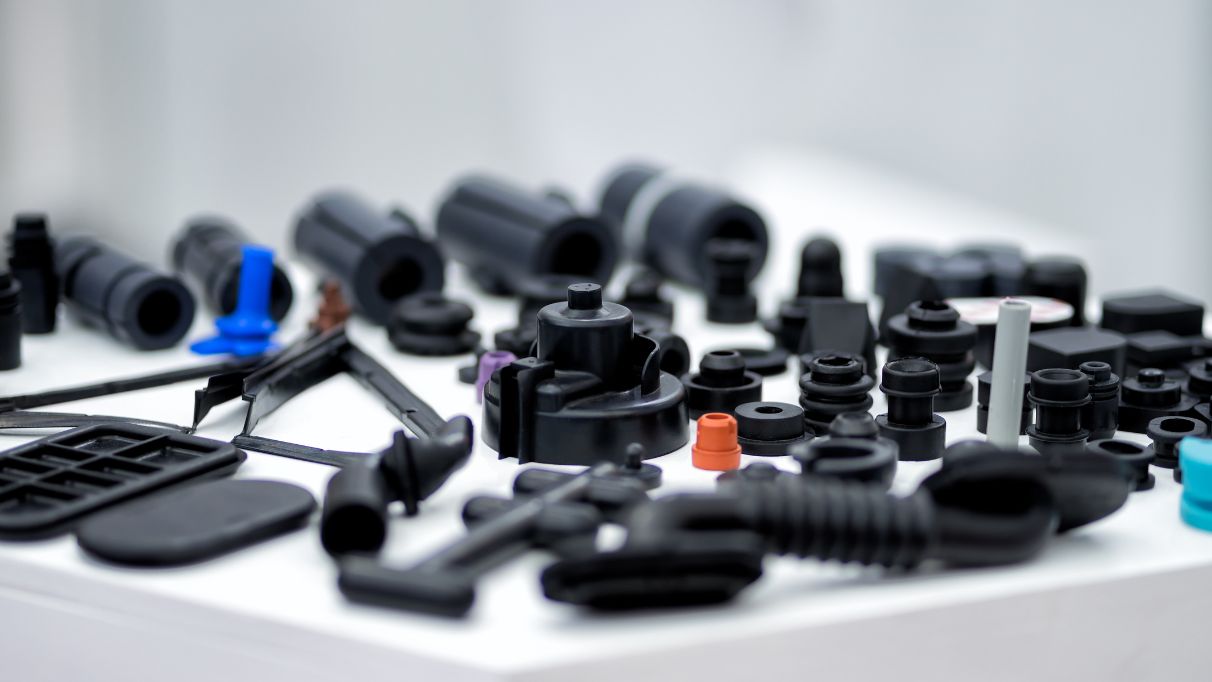
Can injection molded parts be customized or modified to meet unique industrial needs?
Yes, injection molded parts can be customized or modified to meet unique industrial needs. The injection molding process offers flexibility and versatility, allowing for the production of highly customized parts with specific design requirements. Here’s a detailed explanation of how injection molded parts can be customized or modified:
Design Customization:
The design of an injection molded part can be tailored to meet unique industrial needs. Design customization involves modifying the part’s geometry, features, and dimensions to achieve specific functional requirements. This can include adding or removing features, changing wall thicknesses, incorporating undercuts or threads, and optimizing the part for assembly or integration with other components. Computer-aided design (CAD) tools and engineering expertise are used to create custom designs that address the specific industrial needs.
Material Selection:
The choice of material for injection molded parts can be customized based on the unique industrial requirements. Different materials possess distinct properties, such as strength, stiffness, chemical resistance, and thermal stability. By selecting the most suitable material, the performance and functionality of the part can be optimized for the specific application. Material customization ensures that the injection molded part can withstand the environmental conditions, operational stresses, and chemical exposures associated with the industrial application.
Surface Finishes:
The surface finish of injection molded parts can be customized to meet specific industrial needs. Surface finishes can range from smooth and polished to textured or patterned, depending on the desired aesthetic appeal, functional requirements, or ease of grip. Custom surface finishes can enhance the part’s appearance, provide additional protection against wear or corrosion, or enable specific interactions with other components or equipment.
Color and Appearance:
Injection molded parts can be customized in terms of color and appearance. Colorants can be added to the material during the molding process to achieve specific shades or color combinations. This customization option is particularly useful when branding, product differentiation, or visual identification is required. Additionally, surface textures, patterns, or special effects can be incorporated into the mold design to create unique appearances or visual effects.
Secondary Operations:
Injection molded parts can undergo secondary operations to further customize or modify them according to unique industrial needs. These secondary operations can include post-molding processes such as machining, drilling, tapping, welding, heat treating, or applying coatings. These operations enable the addition of specific features or functionalities that may not be achievable through the injection molding process alone. Secondary operations provide flexibility for customization and allow for the integration of injection molded parts into complex assemblies or systems.
Tooling Modifications:
If modifications or adjustments are required for an existing injection molded part, the tooling can be modified or reconfigured to accommodate the changes. Tooling modifications can involve altering the mold design, cavity inserts, gating systems, or cooling channels. This allows for the production of modified parts without the need for creating an entirely new mold. Tooling modifications provide cost-effective options for customizing or adapting injection molded parts to meet evolving industrial needs.
Prototyping and Iterative Development:
Injection molding enables the rapid prototyping and iterative development of parts. By using 3D printing or soft tooling, prototype molds can be created to produce small quantities of custom parts for testing, validation, and refinement. This iterative development process allows for modifications and improvements to be made based on real-world feedback, ensuring that the final injection molded parts meet the unique industrial needs effectively.
Overall, injection molded parts can be customized or modified to meet unique industrial needs through design customization, material selection, surface finishes, color and appearance options, secondary operations, tooling modifications, and iterative development. The flexibility and versatility of the injection molding process make it a valuable manufacturing method for creating highly customized parts that address specific industrial requirements.
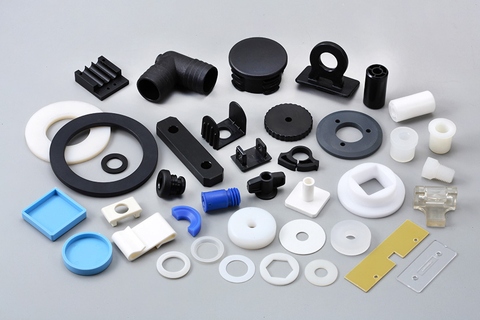
Can you describe the various post-molding processes, such as assembly or secondary operations, for injection molded parts?
Post-molding processes play a crucial role in the production of injection molded parts. These processes include assembly and secondary operations that are performed after the initial molding stage. Here’s a detailed explanation of the various post-molding processes for injection molded parts:
1. Assembly:
Assembly involves joining multiple injection molded parts together to create a finished product or sub-assembly. The assembly process can include various techniques such as mechanical fastening (screws, clips, or snaps), adhesive bonding, ultrasonic welding, heat staking, or solvent welding. Assembly ensures that the individual molded parts are securely combined to achieve the desired functionality and structural integrity of the final product.
2. Surface Finishing:
Surface finishing processes are performed to enhance the appearance, texture, and functionality of injection molded parts. Common surface finishing techniques include painting, printing (such as pad printing or screen printing), hot stamping, laser etching, or applying specialized coatings. These processes can add decorative features, branding elements, or improve the surface properties of the parts, such as scratch resistance or UV protection.
3. Machining or Trimming:
In some cases, injection molded parts may require additional machining or trimming to achieve the desired final dimensions or remove excess material. This can involve processes such as CNC milling, drilling, reaming, or turning. Machining or trimming is often necessary when tight tolerances, specific geometries, or critical functional features cannot be achieved solely through the injection molding process.
4. Welding or Joining:
Welding or joining processes are used to fuse or bond injection molded parts together. Common welding techniques for plastic parts include ultrasonic welding, hot plate welding, vibration welding, or laser welding. These processes create strong and reliable joints between the molded parts, ensuring structural integrity and functionality in the final product.
5. Insertion of Inserts:
Insertion involves placing metal or plastic inserts into the mold cavity before the injection molding process. These inserts can provide additional strength, reinforce threaded connections, or serve as mounting points for other components. Inserts can be placed manually or using automated equipment, and they become permanently embedded in the molded parts during the molding process.
6. Overmolding or Two-Shot Molding:
Overmolding or two-shot molding processes allow for the creation of injection molded parts with multiple layers or materials. In overmolding, a second material is molded over a pre-existing substrate, providing enhanced functionality, aesthetics, or grip. Two-shot molding involves injecting two different materials into different sections of the mold to create a single part with multiple colors or materials. These processes enable the integration of multiple materials or components into a single injection molded part.
7. Deflashing or Deburring:
Deflashing or deburring processes involve removing excess flash or burrs that may be present on the molded parts after the injection molding process. Flash refers to the excess material that extends beyond the parting line of the mold, while burrs are small protrusions or rough edges caused by the mold features. Deflashing or deburring ensures that the molded parts have smooth edges and surfaces, improving their appearance, functionality, and safety.
8. Inspection and Quality Control:
Inspection and quality control processes are performed to ensure that the injection molded parts meet the required specifications and quality standards. This can involve visual inspection, dimensional measurement, functional testing, or other specialized testing methods. Inspection and quality control processes help identify any defects, inconsistencies, or deviations that may require rework or rejection of the parts, ensuring that only high-quality parts are used in the final product or assembly.
9. Packaging and Labeling:
Once the post-molding processes are complete, the injection molded parts are typically packaged and labeled for storage, transportation, or distribution. Packaging can include individual part packaging, bulk packaging, or custom packaging based on specific requirements. Labeling may involve adding product identification, barcodes, or instructions for proper handling or usage.
These post-molding processes are vital in achieving the desired functionality, appearance, and quality of injection molded parts. They enable the integration of multiple components, surface finishing, dimensional accuracy, and assembly of the final products or sub-assemblies.
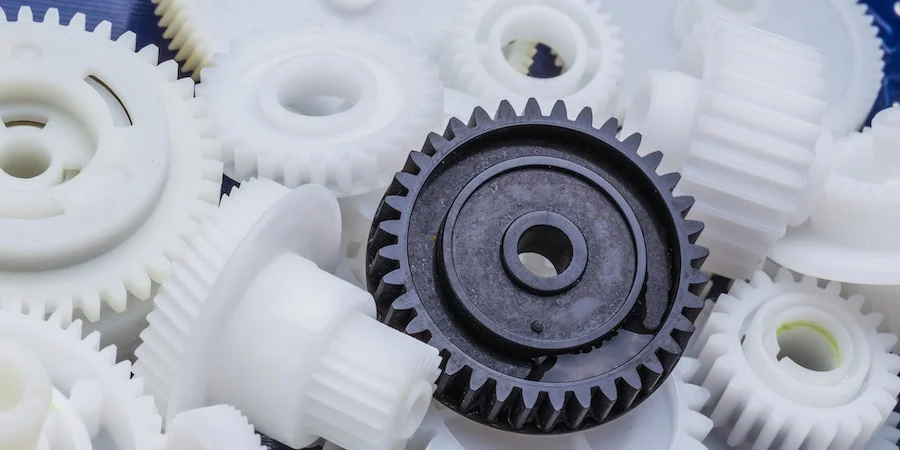
How do injection molded parts compare to other manufacturing methods in terms of cost and efficiency?
Injection molded parts have distinct advantages over other manufacturing methods when it comes to cost and efficiency. The injection molding process offers high efficiency and cost-effectiveness, especially for large-scale production. Here’s a detailed explanation of how injection molded parts compare to other manufacturing methods:
Cost Comparison:
Injection molding can be cost-effective compared to other manufacturing methods for several reasons:
1. Tooling Costs:
Injection molding requires an initial investment in creating molds, which can be costly. However, once the molds are made, they can be used repeatedly for producing a large number of parts, resulting in a lower per-unit cost. The amortized tooling costs make injection molding more cost-effective for high-volume production runs.
2. Material Efficiency:
Injection molding is highly efficient in terms of material usage. The process allows for precise control over the amount of material injected into the mold, minimizing waste. Additionally, excess material from the molding process can be recycled and reused, further reducing material costs compared to methods that generate more significant amounts of waste.
3. Labor Costs:
Injection molding is a highly automated process, requiring minimal labor compared to other manufacturing methods. Once the molds are set up and the process parameters are established, the injection molding machine can run continuously, producing parts with minimal human intervention. This automation reduces labor costs and increases overall efficiency.
Efficiency Comparison:
Injection molded parts offer several advantages in terms of efficiency:
1. Rapid Production Cycle:
Injection molding is a fast manufacturing process, capable of producing parts in a relatively short cycle time. The cycle time depends on factors such as part complexity, material properties, and cooling time. However, compared to other methods such as machining or casting, injection molding can produce multiple parts simultaneously in each cycle, resulting in higher production rates and improved efficiency.
2. High Precision and Consistency:
Injection molding enables the production of parts with high precision and consistency. The molds used in injection molding are designed to provide accurate and repeatable dimensional control. This precision ensures that each part meets the required specifications, reducing the need for additional machining or post-processing operations. The ability to consistently produce precise parts enhances efficiency and reduces time and costs associated with rework or rejected parts.
3. Scalability:
Injection molding is highly scalable, making it suitable for both low-volume and high-volume production. Once the molds are created, the injection molding process can be easily replicated, allowing for efficient production of identical parts. The ability to scale production quickly and efficiently makes injection molding a preferred method for meeting changing market demands.
4. Design Complexity:
Injection molding supports the production of parts with complex geometries and intricate details. The molds can be designed to accommodate undercuts, thin walls, and complex shapes that may be challenging or costly with other manufacturing methods. This flexibility in design allows for the integration of multiple components into a single part, reducing assembly requirements and potential points of failure. The ability to produce complex designs efficiently enhances overall efficiency and functionality.
5. Material Versatility:
Injection molding supports a wide range of thermoplastic materials, providing versatility in material selection based on the desired properties of the final part. Different materials can be chosen to achieve specific characteristics such as strength, flexibility, heat resistance, chemical resistance, or transparency. This material versatility allows for efficient customization and optimization of part performance.
In summary, injection molded parts are cost-effective and efficient compared to many other manufacturing methods. The initial tooling costs are offset by the ability to produce a large number of parts at a lower per-unit cost. The material efficiency, labor automation, rapid production cycle, high precision, scalability, design complexity, and material versatility contribute to the overall cost-effectiveness and efficiency of injection molding. These advantages make injection molding a preferred choice for various industries seeking to produce high-quality parts efficiently and economically.


editor by CX 2023-12-07